
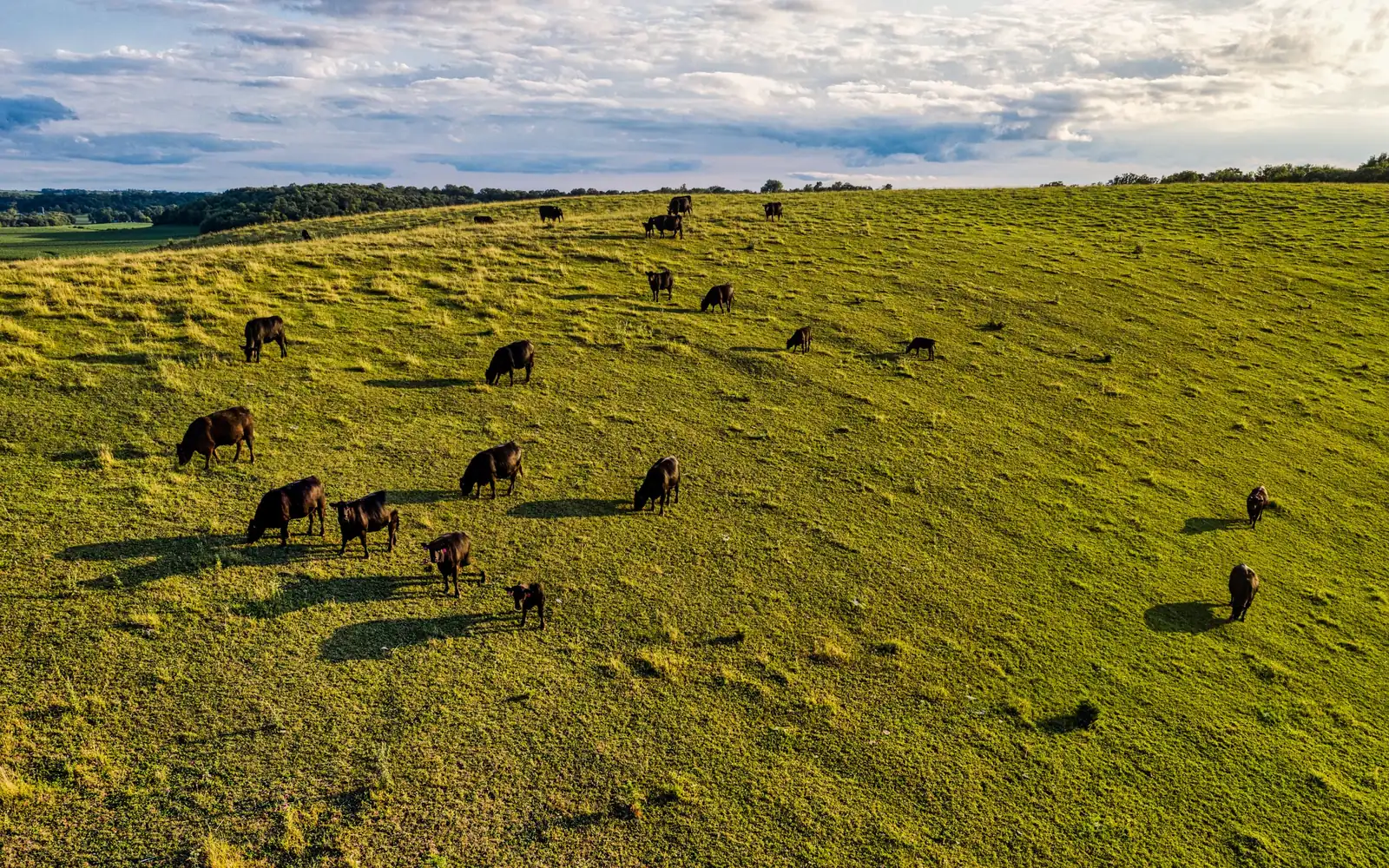
- A day for a spring-calving cow in hot weather (Nebraska Extension)
- 20-24 gal
- More each day for her calf
- 5-10 gal
- A year to check 10 tanks daily at 15 minutes each
- 910 hrs
- Monitor readings a day, on cellular or satellite
- 12 or 4
Why summer is when water checks matter most
Cattle drink more as it gets hotter, so the same tank empties faster in August than in March, and a stuck float gives you less time to catch it. University of Nebraska-Lincoln Extension puts the daily need at about 2 gallons per 100 pounds of body weight for lactating cows and 1 to 1.5 gallons per 100 pounds for bulls and dry cows. In hot weather it puts a spring-calving cow at close to 20 to 24 gallons a day for herself, plus another 5 to 10 gallons for her calf (Nebraska Extension, BeefWatch).
Those figures come from Nebraska and describe the animal, so treat them as a starting point. Your cattle, your feed and a Texas afternoon will move them.
How often should you check stock tanks?
There is no single number that fits every tank. The useful question is this: if the float stuck or the line broke right after you drove away, how long would this tank last? That depends on two things you can work out.
- How much water the tank holds when it is full.
- How much the cattle on it drink in a day.
A worked example
Take 30 cow-calf pairs in hot weather. Using the extension figures above, each pair needs roughly 25 to 34 gallons a day, so the bunch drinks about 750 to 1,020 gallons a day. A 1,000-gallon trough with a failed refill holds about one day of water for them. A tank that size needs someone, or something, looking at it every day. A larger storage tank buys more time, and a smaller trough buys less.
What goes wrong at a tank
The failures are ordinary, and each one looks different when you track the level over time:
- A float stuck closed, a leak or a broken line: a sharp drop that keeps going.
- A float stuck open: the level rises above your overflow line and water runs on the ground.
- A supply that cannot keep up: a slow slide over several days.
- Normal use: a steady dip during the day that recovers as the float refills.
The slow slide is the one a single daily look tends to miss, because the tank never looks empty on the day you see it.
What the driving costs
The Savings Calculator adds up the hours and fuel that go into checking water by truck. It multiplies your number of tanks by checks per week, minutes per check and miles per check, then prices the hours at your labor rate and the miles at your fuel cost.
Its starting example is 10 tanks checked once a day:
| Input or result | Figure |
|---|---|
| Tanks | 10 |
| Checks per tank | 7 a week |
| Time per check, including travel | 15 minutes |
| Round trip per check | 5 miles |
| Time spent in a year | 910 hours |
| Miles driven in a year | 18,200 |
| Cost at $25 an hour, $3.50 a gallon and 15 mpg | $26,997 a year |
That is an example, not a promise. Put in your own tanks, distances and prices to get your own figure.
What a tank monitor changes
A monitor checks the level for you and sends it to your phone. The VitaRanch water tank monitor reports 12 times a day where there is cell signal and 4 times a day over satellite where there is not, and it switches between the two on its own. You set a warning level and a critical level for each tank and get an alert by push notification, text or email when the water drops below them.
It does not replace seeing your cattle. It means the trips you make are the ones that matter, and a tank that fails on a Tuesday does not wait until your next round to be found.
For how the sensor works and how to install it, see stock tank water level monitoring.
Setting alert levels for summer
- Set the warning level high enough to cover the time it takes you to get out there, plus how fast that tank drops on a hot day.
- Set the critical level where you would drop everything and go.
- Set a high water level so a float stuck open does not run a tank over for days.
- Turn on the daily water report if you want one summary a day whether anything is wrong or not.
Levels are entered in feet of water above the probe, and you can change them from your account as the season changes.
In a dry spell
When water is short the trend matters more than today's reading. The chart in the dashboard shows each tank's level over time with your alert lines drawn on it, so a supply that is falling behind shows up as a slide over days, while there is still time to haul water or move cattle.
Satellite Water Tank Monitor
Tank levels on your phone, with alerts before a trough runs dry.